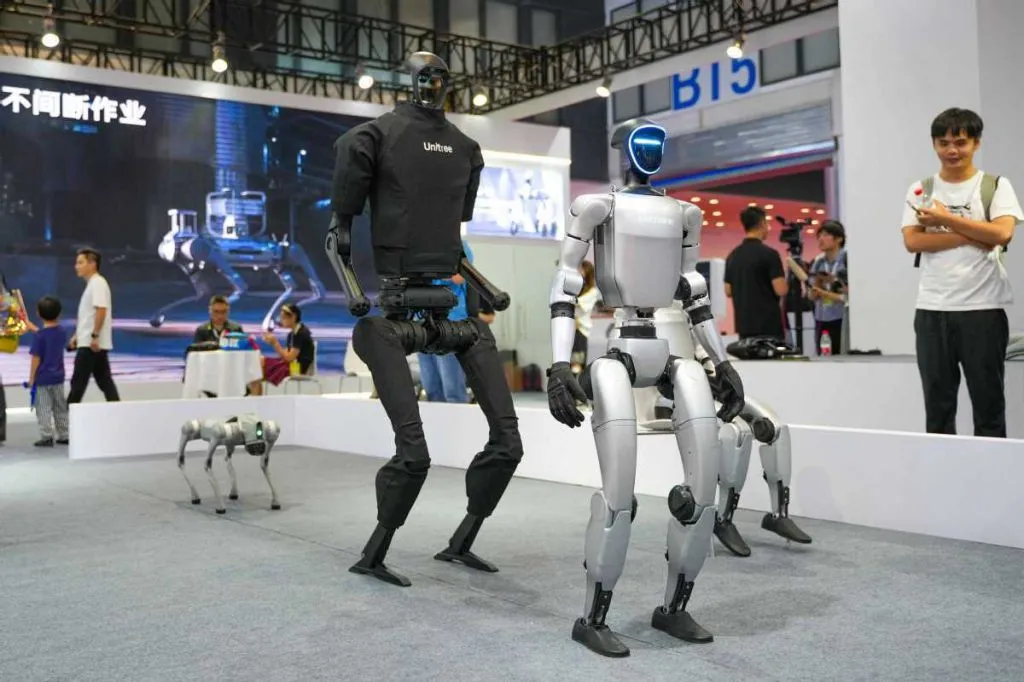
China is set to surpass 100,000 humanoid robot units produced this year, according to a senior official, signaling a massive acceleration in domestic robotics manufacturing and deployment.
The projected output demonstrates China's aggressive push into advanced automation sectors, positioning the nation as a dominant global player in humanoid technology production. This surge reflects sustained governmental investment and rapid commercialization across various industrial and consumer applications.
Domestic Production Surges Amid Strategic Investment
A senior official confirmed the production milestone, highlighting that the growth trajectory for humanoid robots far exceeds initial forecasts. The manufacturing capacity expansion is not merely quantitative; it represents a structural shift in China's industrial strategy toward intelligent automation.
These developments are supported by significant policy backing aimed at integrating advanced robotics into key economic drivers. Government initiatives encourage domestic R&D breakthroughs, reducing reliance on foreign technological imports within critical automated systems.
The increased output is driven by advancements in several core areas, including improved battery life, enhanced sensor integration, and more sophisticated motor control systems. These technical improvements allow the robots to handle a wider array of complex tasks in real-world operational environments.
Furthermore, the expansion into mass production indicates that these advanced machines are moving beyond laboratory prototypes toward scalable commercial viability. Manufacturers are streamlining assembly lines specifically for humanoid forms, optimizing cost structures necessary for broader market penetration.
Implications for Global Automation and Labor Markets
This rapid domestic scaling carries significant ramifications for global labor markets and the worldwide robotics supply chain. China’s ability to produce units at this projected volume fundamentally alters the competitive landscape for automation hardware.
The deployment of these humanoid robots is anticipated across diverse sectors, ranging from manufacturing assembly lines that require human-like dexterity to service industries such as elder care and logistics within urban centers. This breadth of application underscores their versatility.
Industry analysts suggest that this output surge will catalyze further investment in related technologies, including artificial intelligence frameworks tailored for bipedal locomotion and complex interaction modeling. The demand pipeline is expected to continue growing substantially beyond the current projection.
The ability to rapidly scale production while maintaining high levels of functional sophistication places Chinese firms at a distinct advantage globally. This momentum suggests that humanoid robotics may transition from a niche, futuristic technology to a foundational component of modern industrial infrastructure within the coming years.
For international markets, this means increased competition and potentially more accessible advanced automation solutions as domestic costs are driven down by economies of scale realized through high-volume output. As we covered in our story on Affordable Embodied AI Robots Entering Chinese Homes, this trend continues to shape the strategic landscape.