
🎙 Listen to a summary of this story
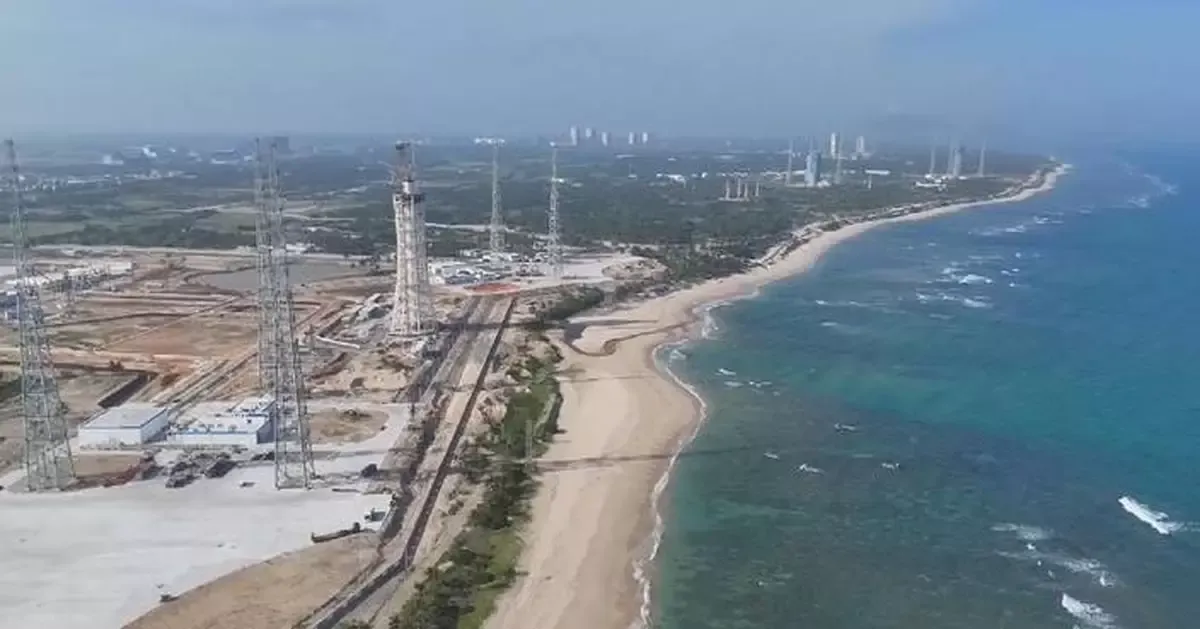
Hainan Commercial Launch Site Phase II for commercial space flight has commenced full system rehearsals after 612 days, marking a critical step toward operational capability with the addition of Pads 3 and 4. This significant milestone elevates China's domestic space launch infrastructure capabilities, positioning Hainan as a central hub for future commercial and governmental space activities in the region.
The activation of these newly integrated pads signals a maturation of the site's readiness, moving beyond initial construction phases into rigorous performance validation for future commercial launches. The rehearsal process validates the integration between ground support equipment, launch vehicles, and mission control systems under near-operational conditions, which is crucial for mitigating risks associated with high-cadence commercial launches.
This expansion directly addresses the growing domestic demand for reliable, domestically controlled launch services, reducing reliance on foreign providers for China's burgeoning satellite constellation deployment and deep space missions. The site’s readiness underpins strategic goals related to achieving self-sufficiency in critical aerospace technology.
Technical Integration and Infrastructure Scale
The integration of Pads 3 and 4 represents a substantial increase in the facility's launch capacity and operational footprint. These new pads incorporate advanced telemetry, tracking, and command (TT&C) systems designed to handle diverse payload requirements, ranging from small Earth observation satellites to heavier communications payloads.
The full system rehearsal involves complex end-to-end simulations, testing everything from cryogenic fueling procedures for specific vehicle classes to the final countdown sequence protocols. This comprehensive validation ensures that all interfaces—hardware and software—function seamlessly across the entire launch chain, a process that takes considerable time given the complexity of modern spaceflight operations.
The site leverages state-of-the-art infrastructure developed in conjunction with China's leading aerospace entities to ensure high reliability. The physical expansion supports both increased throughput and enhanced safety margins required for commercial contracts, solidifying its role as a multi-purpose launch complex.
Geopolitical and Market Ramifications
The operationalization of Hainan Phase II carries significant geopolitical weight, strengthening China's position within the global space economy. By increasing domestic launch capacity, Beijing enhances its strategic autonomy in accessing orbit for national security interests and commercial ventures alike.
For the commercial sector, this development lowers perceived risk associated with using Chinese launch services. As international demand for low-earth orbit (LEO) deployment grows—driven by mega-constellations—a robust, domestically controlled facility like Hainan becomes an increasingly attractive partner for global satellite operators looking to diversify their launch providers.
Analysts view this expansion not merely as a capacity increase but as a strategic move to solidify the "space Silk Road." The site's capability supports China’s broader ambitions in international space collaboration while maintaining stringent control over its most critical launch assets. Further detailed analyses of the commercial contracts secured by the site will provide clearer insight into the immediate market impact.