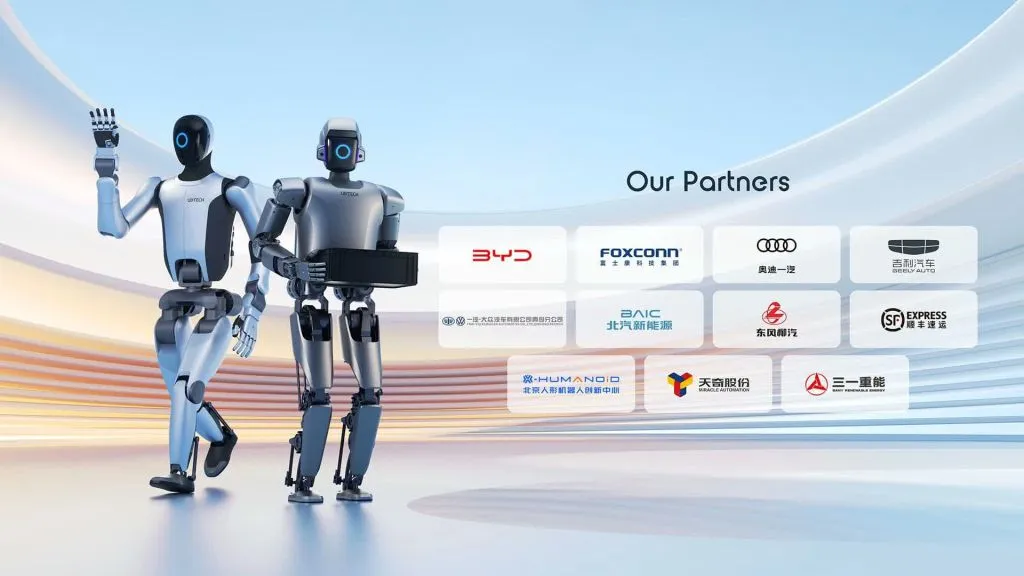
UBTech has introduced ultra-bio-mimetic humanoid robots capable of mass production, signaling a major acceleration in advanced robotics deployment.
The company's new line of robots integrates highly sophisticated bio-inspired engineering to achieve unprecedented levels of human-robot interaction and operational efficiency across various industrial sectors. This development positions UBTech at the forefront of China's push toward intelligent automation and advanced manufacturing capabilities, directly addressing global labor shortages and productivity demands.
These humanoid platforms are engineered not merely for simulation but for tangible utility in complex environments. Sources indicate that the robots feature proprietary actuators designed to mimic human muscle structure, granting them superior dexterity and endurance compared to previous generations of industrial automatons. The design prioritizes robustness while maintaining a form factor conducive to seamless integration into existing human workflows.
The strategic significance of this unveiling lies in the transition from laboratory prototypes to scalable commercial products. Mass production capability implies that these advanced technologies are moving out of niche, high-cost applications and toward broader industrial adoption in logistics, elder care assistance, and complex assembly lines. This shift represents a crucial inflection point for the robotics industry worldwide.
Technological Advancements Driving Production
The core innovation resides within UBTech's proprietary bio-mimetic architecture. Unlike traditional rigid robotic structures, these new units incorporate soft robotics elements coupled with high-torque electromechanical systems. This hybrid approach allows the robots to navigate uneven terrain and handle delicate objects with a degree of nuanced control previously unattainable in automated systems.
Furthermore, the integrated sensor suite provides real-time environmental awareness far exceeding standard industrial monitoring. The robots utilize advanced computer vision algorithms combined with tactile feedback systems, enabling them to perceive subtle changes in their surroundings—such as recognizing minute shifts in an object's weight or identifying slight variations in a surface texture.
UBTech emphasized that the production process itself has been optimized for high yield and reduced complexity. By standardizing key modular components while retaining biological flexibility in the design, the company has successfully lowered the barrier to entry for adopting such sophisticated machinery across SMEs as well as large enterprises.
The operational parameters tested during pre-launch trials demonstrated sustained functionality under demanding conditions equivalent to a full eight-hour shift in diverse manufacturing settings. This longevity and adaptability are critical metrics that dictate real-world ROI for industrial purchasers.
Market Impact and Future Trajectory
The introduction of these production-ready, bio-mimetic humanoids directly challenges established players in the global automation market. By focusing on true biological replication rather than mere functional imitation, UBTech is targeting applications requiring genuine cognitive flexibility alongside physical capability.
Industry analysts suggest that this product line will catalyze further investment in domestic AI and hardware integration within China’s technology sector. The ability to mass-produce such complex machines validates the national strategy emphasizing deep technological self-sufficiency across critical industries.
UBTech plans to roll out these units starting in several key industrial parks throughout Q3 of this year, with ongoing software updates scheduled to enhance learning capabilities through continuous operational data feedback. The company stated its commitment to evolving the robots into collaborative partners rather than mere replacements for human labor.