
Tianjin moves to make brain-computer interfaces mainstream
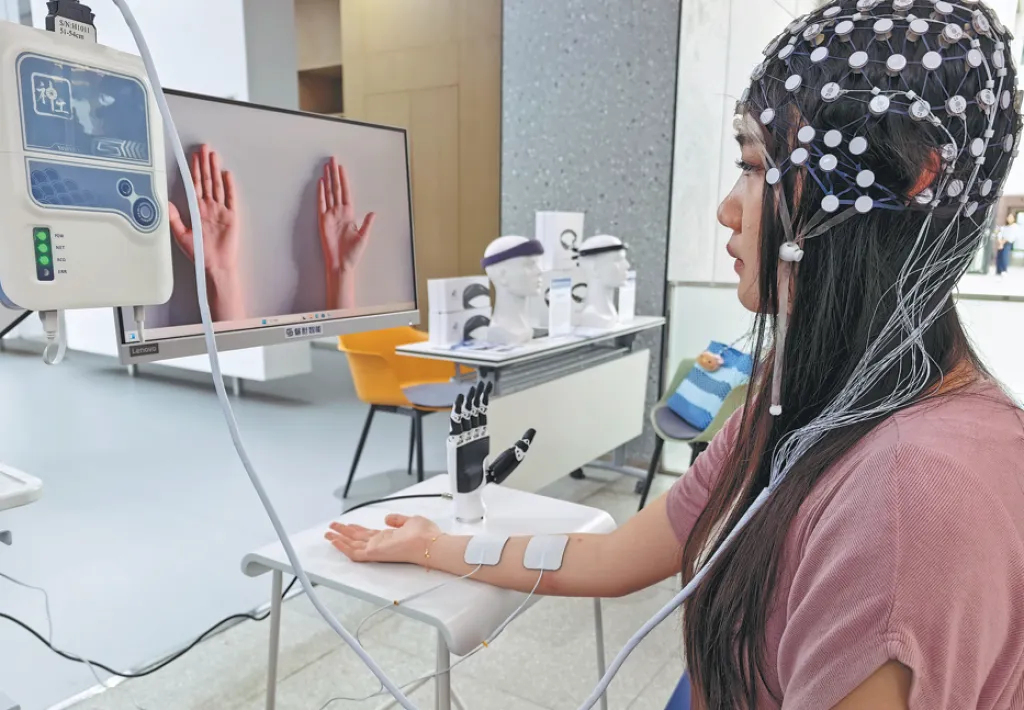
In a laboratory in northern China, a visitor straps into a brain-computer interaction system and watches a once-futuristic idea move closer to routine use: machines responding to signals from the human brain.
Tianjin, a major port city southeast of Beijing, is positioning itself as a national center for brain-computer interface technology, betting that systems linking neural activity with computers can move from research labs into hospitals, classrooms and factories.
The city recently opened a dedicated industrial cluster for brain-computer interface, or BCI, development and released a five-year action plan running through 2030. The plan calls for cultivating 50 competitive innovation companies by 2027 and expanding the use of BCI products in health care, education, advanced manufacturing and other sectors.
By 2030, Tianjin aims to establish an industrial fund group worth more than 10 billion yuan, or about $1.48 billion, and help push more than 10 types of noninvasive BCI products into wide clinical use.
Brain-computer interface technology covers systems that detect, interpret and act on brain signals. Unlike implanted systems, noninvasive BCI typically relies on external sensors to read neural activity, making it less risky and more practical for broad use, though often less precise than devices placed inside the body.
Officials and researchers say Tianjin’s advantage lies in a full supply chain that includes electrodes, algorithms, chips, system integration and application testing. The Haihe Laboratory of Brain-Computer Interaction and Human-Machine Integration has become the city’s flagship institution, combining research with commercial development.
Medical uses lead early commercial push
The most immediate applications are emerging in medicine. Tiankai Suishi Intelligent Technology Co., founded in 2023 and incubated by the Haihe laboratory, has developed BCI-based medical devices and treatment systems now used in dozens of hospitals across more than 10 provincial-level regions in China.
One reported case involved a stroke patient with paralysis on the right side of the body. During rehabilitation, a BCI system detected the patient’s imagined movement and translated those signals into operation of rehabilitation equipment. After treatment, the patient was able to turn over independently and regained basic motor function in the right leg.
Researchers say the promise of such systems is that they may allow patients to trigger movement through their own neural intent rather than through purely external assistance. That distinction could be important for rehabilitation, where repeated connection between intention and movement can help retrain damaged neural pathways.
Other uses being pursued include depression screening and treatment support, faster diagnosis in critical care, and hearing rehabilitation. BCI-enhanced cochlear implant systems are being explored to help children with hearing impairments not only detect sounds but also develop language understanding.
Tianjin is also trying to build a workforce around the sector. Tianjin University launched China’s first undergraduate program dedicated to BCI in 2024, part of a broader effort to train engineers, clinicians and researchers for a field that blends neuroscience, computing, materials science and product design.
Despite the momentum, broad adoption will depend on clinical evidence, regulatory review, affordability and public trust. As BCI systems enter hospitals and other public settings, questions about data privacy, safety and the limits of machine interpretation of brain signals are likely to grow alongside the industry itself.