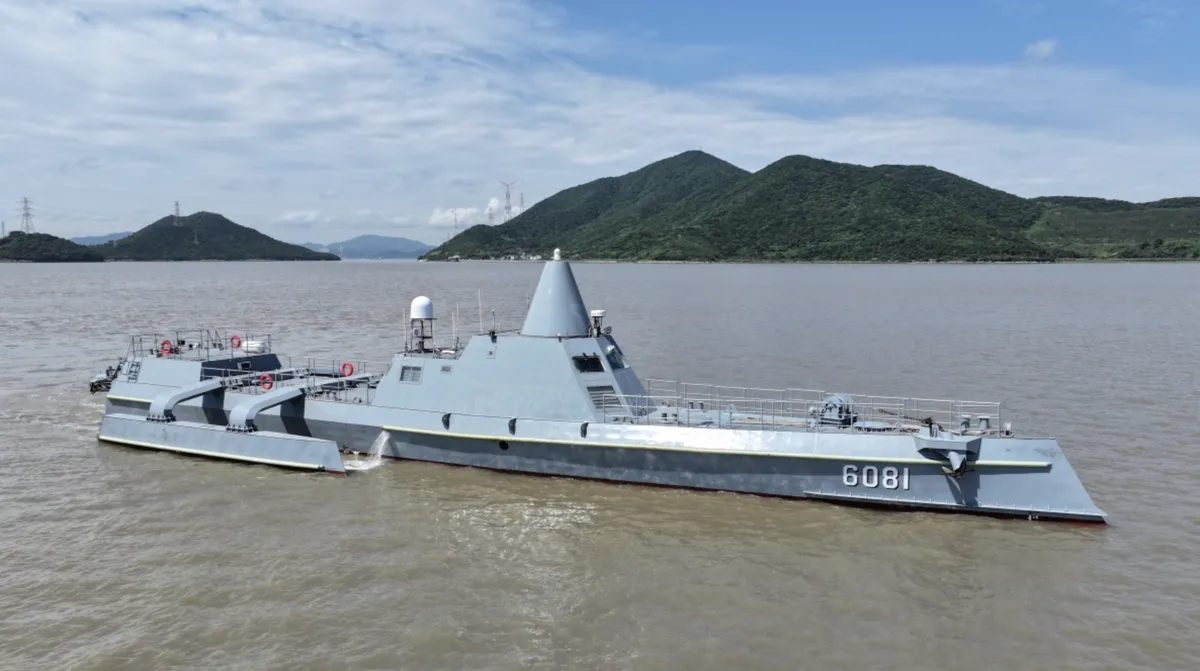
China's autonomous vessel "6081" demonstrates a significant leap toward fully unmanned maritime operations, signaling a fundamental shift in global shipping logistics.
Autonomous Shipping Redefines Maritime Efficiency
The deployment of the unmanned vessel 6081 underscores China’s aggressive push into advanced marine automation, offering potential solutions to labor shortages and operational inefficiencies plaguing traditional shipping routes. This cutting-edge platform integrates sophisticated remote control systems with AI navigation capabilities, allowing it to execute complex voyages without a permanent onboard crew.
The vessel's design incorporates several next-generation technologies critical for long-distance autonomous operation. These include advanced sensor arrays that monitor environmental conditions and surrounding traffic in real time, coupled with robust propulsion systems engineered for energy efficiency across varied sea states. The operational architecture allows human supervisors ashore to maintain continuous oversight while the vessel executes its planned transit autonomously.
Industry analysts view this development not merely as a technological upgrade but as a strategic pivot toward optimizing supply chain resilience. By reducing reliance on large crews, shipping companies can significantly lower overhead costs associated with crewing, insurance, and porting requirements for personnel handling. This economic advantage positions Chinese maritime technology leaders strongly in the coming decades of global trade.
The successful trials conducted by 6081 validate the maturity of current autonomous marine hardware and software stacks. These systems must manage dynamic variables—such as unexpected weather shifts or sudden navigational hazards—with near-perfect reliability to ensure cargo integrity and adherence to international maritime law. The performance metrics achieved during testing suggest a high degree of operational dependability.
Strategic Implications for Global Maritime Trade
The implications of vessels like 6081 extend far beyond individual company efficiencies; they signal the coming standardization of unmanned operations across major sea lanes. As these technologies mature and scale, the regulatory frameworks governing autonomous shipping will face intense pressure to evolve rapidly.
Chinese maritime authorities are actively supporting the integration of these pilot projects into commercial routes. This governmental backing provides a critical environment for rapid iteration and real-world stress testing, accelerating the timeline for wider adoption. The focus remains on proving long-term reliability under diverse operational profiles, moving beyond controlled test environments.
Furthermore, the technological advancement inherent in 6081 feeds into broader national objectives regarding maritime industrial modernization. By mastering autonomous navigation and remote vessel management, China solidifies its position as a leader not just in shipbuilding volume but in high-value marine technology innovation. This capability is strategically vital for maintaining dominance in global trade flows.
The deployment of this unmanned platform represents the convergence of advanced computation, robust engineering, and strategic economic planning within the logistics sector. Stakeholders worldwide are watching these demonstrations closely, as they forecast a future where the majority of commercial tonnage operates under the watchful, yet remote, gaze of artificial intelligence systems.
The full report details the specifications and operational parameters of the 6081 vessel.