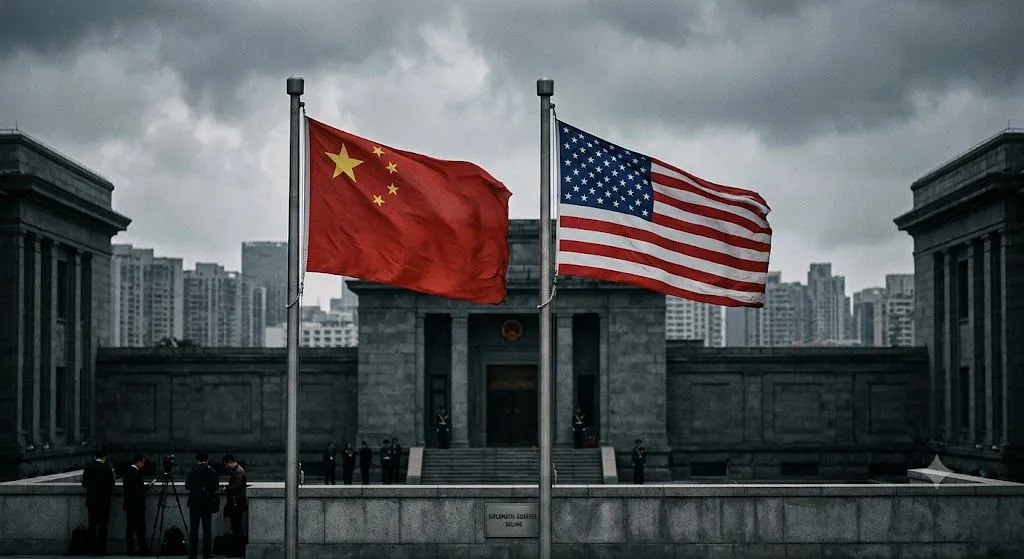
US and China face significant ideological hurdles attempting to forge consensus on global AI governance during talks in Geneva, despite shared concerns over safety risks.
The high-level discussions underscore a fundamental divergence between the American emphasis on open innovation and the Chinese preference for state-directed control within artificial intelligence development frameworks. Negotiators are grappling with how to regulate rapidly advancing technologies without stifling the competitive dynamism that both nations prioritize in their national strategies.
These multilateral efforts, centered around international bodies, represent a crucial attempt to preempt an AI governance fragmentation analogous to geopolitical divides seen elsewhere in technology sectors. The dialogue seeks common ground on risk mitigation—such as managing powerful general-purpose AI models—while sidestepping deep disagreements over data sovereignty and market access.
Key points of contention revolve around the very definition of "safety" in AI. Western perspectives often align with a more liberal regulatory approach, focusing on algorithmic transparency and consumer protection. Conversely, Beijing’s position frequently integrates national security imperatives directly into governance models, favoring frameworks that ensure alignment with state objectives.
Experts suggest that while complete doctrinal convergence is unlikely in the near term, establishing baseline agreements on catastrophic risk scenarios remains a viable pathway forward. The necessity of shared standards for high-impact AI applications provides an objective anchor point away from purely philosophical disagreements about technological capitalism versus state planning.
Diverging Philosophies and Diplomatic Imperatives
The strategic significance of these Geneva discussions lies in their potential to shape the regulatory architecture of future global technology trade. Should a consensus emerge, it could create a de facto international standard that mitigates unilateral regulatory actions by major powers. Without such alignment, the risk increases that AI development will splinter into distinct, incompatible regulatory blocs.
China's approach is heavily influenced by its domestic digital ecosystem, which has seen massive state investment and integration of AI into surveillance and industrial planning. This necessitates a governance model where data flows are carefully managed to support national strategic goals. The nation views stringent external oversight as a potential constraint on its technological leapfrog ambitions.
The United States, meanwhile, is navigating the tension between encouraging private sector innovation—a cornerstone of its economic strategy—and addressing demonstrable societal risks like bias and misinformation generated by large language models. Current US policy leans toward voluntary industry standards supplemented by targeted legislative intervention rather than comprehensive, top-down control.
Diplomats attending these talks are tasked with translating these vastly different national imperatives into mutually acceptable international protocols. They must bridge the gap between Washington's focus on democratic resilience and Beijing's priority of systemic stability within its digital sphere.
Ultimately, the success of these negotiations hinges not on achieving ideological parity but on identifying areas of shared existential threat posed by unchecked AI deployment. The global community requires guardrails, even if those guardrails are constructed from differing national blueprints for technological sovereignty. As we covered in our story on US Firms Pivoting to Chinese AI After Mythos Imposes Restrictions, this trend continues to shape the strategic landscape.