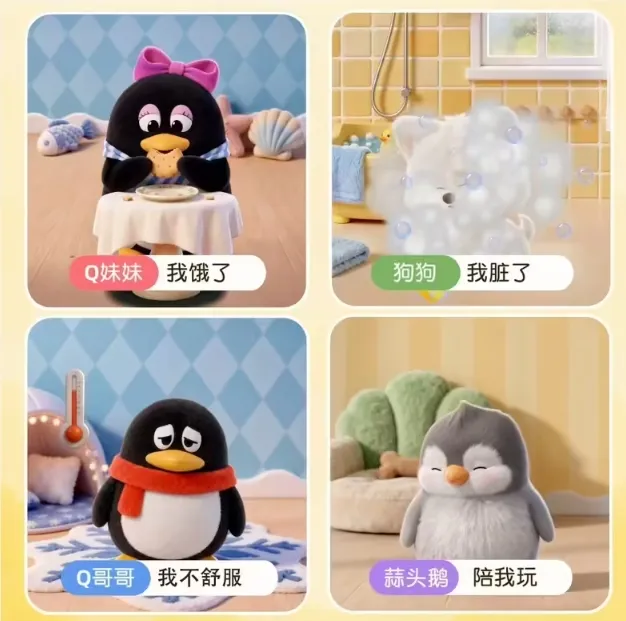
Tencent is relaunching its iconic QQ Pet virtual companion, significantly upgrading the experience by integrating Hunyuan Hy3, a powerful large language model, into the classic digital pet.
This strategic infusion of advanced AI technology signals Tencent's continued commitment to deepening user engagement within its established social ecosystem, transforming the nostalgic QQ Pet into a sophisticated, interactive companion capable of complex dialogue and personalized interaction.
The integration moves the virtual pet beyond simple scripted interactions, allowing it to leverage the generative capabilities of Hunyuan Hy3. This means users can expect the pets to respond with more nuanced personalities, participate in deeper conversational threads, and provide contextually relevant responses that mimic genuine companionship rather than merely executing pre-programmed routines.
Hunyuan Hy3 represents a substantial leap in Tencent's domestic AI capabilities, positioning it as a key differentiator against global competitors. By embedding this cutting-edge model into a beloved, legacy product like QQ Pet, the company achieves dual objectives: modernizing an older, high-traffic asset while simultaneously demonstrating the practical application of its newest foundational models to mass consumer markets.
The Technical and Marketing Implications
The shift is not merely cosmetic; it represents a fundamental architectural upgrade. The core functionality of QQ Pet—the digital pet experience—is being augmented by an LLM capable of understanding complex natural language prompts from users, whether they are asking factual questions or simply engaging in casual banter with their virtual friend.
From a strategic standpoint, this move reinforces the "stickiness" of Tencent's platforms. In an increasingly saturated digital landscape where user attention is a finite commodity, embedding sophisticated AI directly into familiar touchpoints like QQ Pet provides a powerful incentive for sustained platform usage.
Industry analysts view this integration as a calculated effort to maintain relevance among younger demographics who are accustomed to highly interactive and conversational AI experiences. The legacy appeal of the original QQ Pet is now being fused with the cutting-edge expectation set by generative AI applications seen across other tech sectors.
The deployment of Hunyuan Hy3 within this context also allows Tencent to gather vast amounts of real-world, emotionally charged conversational data specific to pet interaction. This feedback loop is invaluable for further fine-tuning and improving the performance of the underlying large language model in a highly relatable consumer environment.
Enhancing User Experience Through Generative AI
For the end-user, the difference will be palpable. Instead of receiving canned responses when interacting with their QQ Pet, users can now engage in dynamic exchanges. The pet's personality, previously constrained by its programming parameters, gains a layer of generative flexibility derived from Hunyuan Hy3.
This level of personalization allows users to cultivate unique relationships with their digital companions. A user might ask the pet about its "feelings" or discuss abstract concepts, and the AI is equipped to provide an answer consistent with the established persona of the virtual creature.
Tencent's decision to prioritize this integration within a nostalgic product suggests an understanding that familiarity breeds adoption, even when introducing radically new technology. The platform capitalizes on pre-existing emotional investment in the QQ Pet brand while providing a next-generation feature set.