
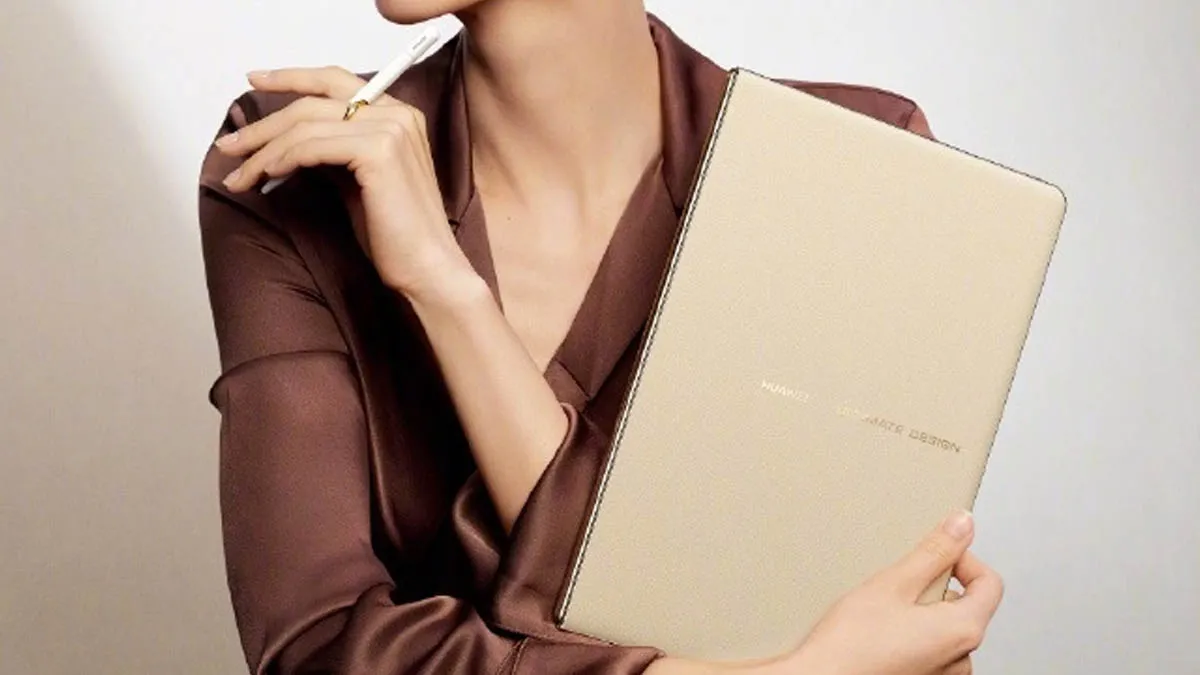
Huawei is set to debut the MateBook Fold 2026, integrating an AI stylus for the first time, signaling a major pivot toward advanced multimodal productivity in its premium laptop line.
Product Innovation and Hardware Specifications
The forthcoming MateBook Fold 2026 represents a significant evolution of Huawei's foldable hardware strategy, moving beyond mere form factor novelty to embed sophisticated artificial intelligence into the core user experience. The introduction of an integrated AI stylus is positioned not as a peripheral accessory but as a fundamental input mechanism designed to enhance creative and professional workflows.
Sources indicate that this device will continue Huawei's trajectory in premium ultrabooks, likely maintaining its high-end build quality while optimizing the folding mechanism for increased durability and thinner profiles. The integration of AI into the stylus functionality suggests capabilities beyond simple digital inking; users can expect features such as real-time transcription, intelligent object recognition within handwritten notes, and context-aware suggestions directly overlaid onto their drawings or documents.
While comprehensive technical specifications remain under wraps ahead of the official launch, industry analysis points to an enhanced processing unit capable of handling demanding AI computations locally on the device. This localized processing is critical for ensuring low latency when using the stylus—a necessity for a fluid writing experience that mimics natural pen interaction.
The MateBook Fold series has consistently targeted users who demand portability without sacrificing desktop-class performance, and this new iteration aims to bridge the gap between traditional computing power and dynamic, tactile input methods. The AI integration transforms the tablet surface from a passive display into an active, intelligent canvas.
Market Positioning and AI Integration
This strategic move by Huawei places the MateBook Fold 2026 squarely in competition with established players who have been aggressively integrating generative AI features across their laptop ecosystems. By embedding proprietary AI capabilities directly into the input device, Huawei aims to differentiate its offering significantly from competitors relying solely on cloud-based processing.
The stylus functions as a key interface for activating these embedded AI services. For instance, instead of merely sketching a flowchart, a user could draw a rough diagram and prompt the integrated AI via the stylus's gesture controls to automatically structure that drawing into a formal Gantt chart or organizational map. This level of seamless interaction is central to Huawei’s narrative for this product generation.
The successful adoption of this feature hinges on the usability of the AI assistant itself. If the integration proves intuitive, it could capture a substantial segment of the creative professional market—designers, architects, and technical writers—who value direct manipulation tools alongside computational power. Conversely, poorly implemented AI features risk becoming mere gimmicks.
The unveiling of the MateBook Fold 2026 with this advanced stylus capability underscores Huawei's commitment to vertical integration; controlling both the sophisticated hardware platform and the specialized software intelligence that runs on it.