Huawei adapts under pressure
Huawei’s latest chip strategy is sharpening a central question in the U.S.-China technology fight: whether Washington’s effort to slow China’s semiconductor advance has instead accelerated Beijing’s drive for self-reliance.
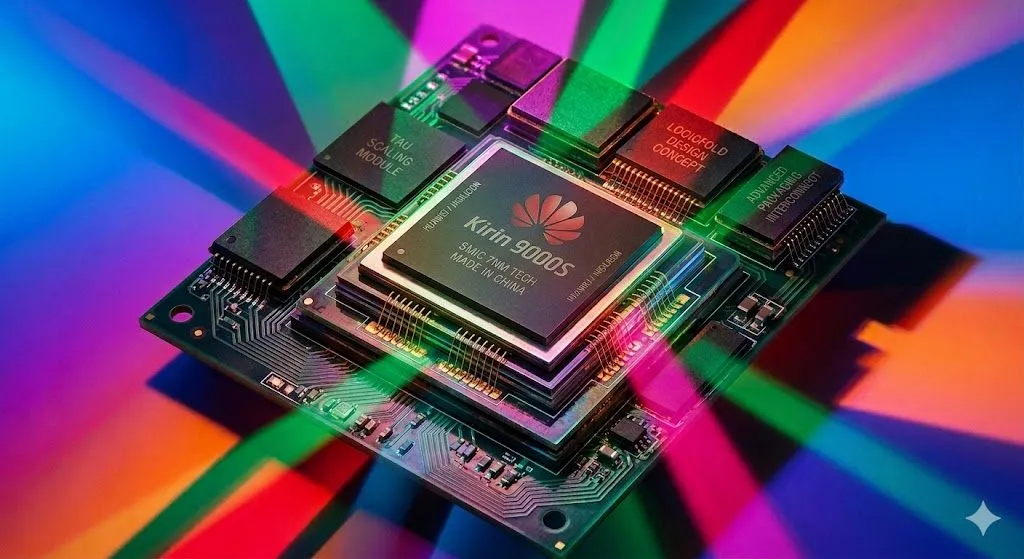
The Chinese telecom equipment and consumer electronics giant has embraced what Huawei Central described as a shift away from traditional Moore’s Law scaling toward “Tau Scaling” and a “LogicFolding” chip design concept, part of an effort to improve performance through architecture, packaging and data movement rather than relying only on ever-smaller transistors. The publication argued the move points to the limited impact of U.S. export controls on Huawei’s long-term ambitions.
The comeback has been years in the making. U.S. restrictions beginning in 2019 cut Huawei off from key American technology, while later controls targeted advanced chips, chipmaking equipment and AI hardware bound for China. The Commerce Department has said the rules are intended to limit China’s access to high-end semiconductors that could support military applications and other national security risks.
Huawei responded by leaning harder on domestic suppliers, its HiSilicon design unit and China’s broader semiconductor ecosystem. Its Mate 60 Pro, released in 2023, became a symbol of that push after TechInsights found the phone used a Kirin 9000S processor made with SMIC’s 7-nanometer technology, a milestone for Chinese chipmaking under sanctions.
The company’s financial performance also suggests it has moved beyond the shock of the first sanctions. Huawei reported 862.1 billion yuan in revenue and 62.6 billion yuan in net profit in 2024, followed by 880.9 billion yuan in revenue and 68 billion yuan in net profit in 2025. Its research and development spending reached 192.3 billion yuan in 2025, or 21.8% of revenue.
Limits remain
The gains do not mean Huawei has closed the technology gap. China still lacks access to the most advanced extreme ultraviolet lithography systems used by leading chipmakers such as TSMC and Samsung. Analysts say SMIC’s processes remain behind global leaders in density, efficiency and yield, forcing Huawei to look for gains through design workarounds, chip stacking and system-level engineering.
Washington has continued to tighten pressure. In May 2025, the Commerce Department’s Bureau of Industry and Security warned that the use of certain Chinese advanced-computing chips, including Huawei Ascend 910B, 910C and 910D chips, could implicate U.S. export-control rules and expose companies to enforcement action.
Yet the restrictions have also created powerful incentives for Chinese firms to replace U.S. technology. Nvidia CEO Jensen Huang has publicly criticized U.S. chip curbs as counterproductive, saying they spurred Chinese development and hurt American companies’ position in the China market.
Huawei’s strategy now appears less like a temporary workaround than an industrial plan: use domestic manufacturing where possible, compensate for weaker fabrication with design innovation, and scale across smartphones, cloud computing, data centers and AI systems. The result is not proof that U.S. controls have failed outright, but it shows their limits. They have slowed Huawei, raised costs and constrained access to world-leading tools. They have not stopped the company from growing.