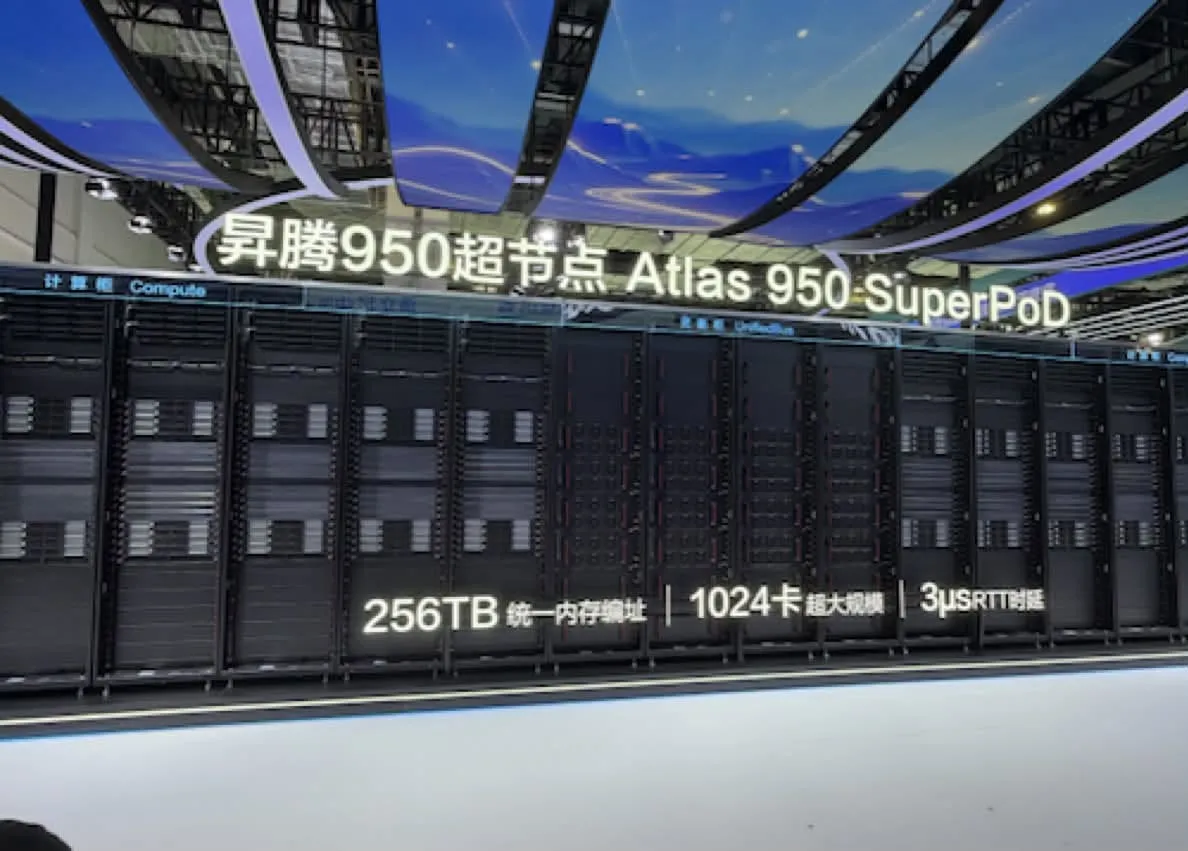
Huawei has launched the advanced Atlas 950 SuperPoD, a powerful computing system poised to significantly advance domestic AI infrastructure capabilities.
Atlas 950 SuperPoD Unveiled
The new Atlas 950 SuperPoD represents a substantial leap in Huawei's high-performance computing architecture, specifically designed to meet the escalating demands of large-scale artificial intelligence training and inference tasks.
This system integrates cutting-edge hardware and software optimizations, positioning it as a critical component for China’s ongoing push toward technological self-sufficiency in advanced computation. The release signals Huawei's continued aggressive expansion within the domestic supercomputing market.
The core of the Atlas 950 SuperPoD leverages specialized AI processors optimized for deep learning workloads. These processors are engineered not only for raw computational throughput but also for high energy efficiency, a growing concern in massive data center deployments.
From an architectural standpoint, the SuperPoD configuration emphasizes dense interconnectivity between processing units. This tight coupling minimizes latency and maximizes the effective utilization of the collective compute power when handling complex, distributed AI models.
The strategic significance lies in its ability to support the training of foundation models—the large-scale neural networks driving modern generative AI applications. By providing a robust and domestically sourced platform, Huawei mitigates supply chain risks associated with reliance on foreign hardware vendors for crucial AI infrastructure.
Industry observers suggest that the Atlas 950 SuperPoD directly addresses bottlenecks previously encountered when scaling up domestic AI operations without compromising performance or operational cost.
Performance and Strategic Implications
Technical specifications indicate substantial improvements in processing power metrics compared to previous generations of Huawei's AI platforms. The system is designed to handle peta-scale computations efficiently, a threshold increasingly relevant for state-level research initiatives and major tech enterprises.
The integration of the Atlas 950 within SuperPoD clusters allows for scalable deployment across various enterprise environments, from academic research labs to hyperscale cloud providers operating within China.
This unveiling aligns with broader national strategies emphasizing digital sovereignty. By mastering the entire stack—from silicon design to system orchestration—Huawei strengthens its position not merely as a hardware vendor but as an essential infrastructure provider for the nation's AI future.
Furthermore, the platform is engineered with comprehensive software support, ensuring that users can rapidly deploy and optimize existing and emerging deep learning frameworks on the new hardware. This holistic approach to system delivery distinguishes it from purely component-based offerings.
The market implications suggest increased competition in the high-end AI accelerator segment within China. Organizations seeking to build resilient, large-scale AI ecosystems now have a powerful, localized alternative to established international solutions.