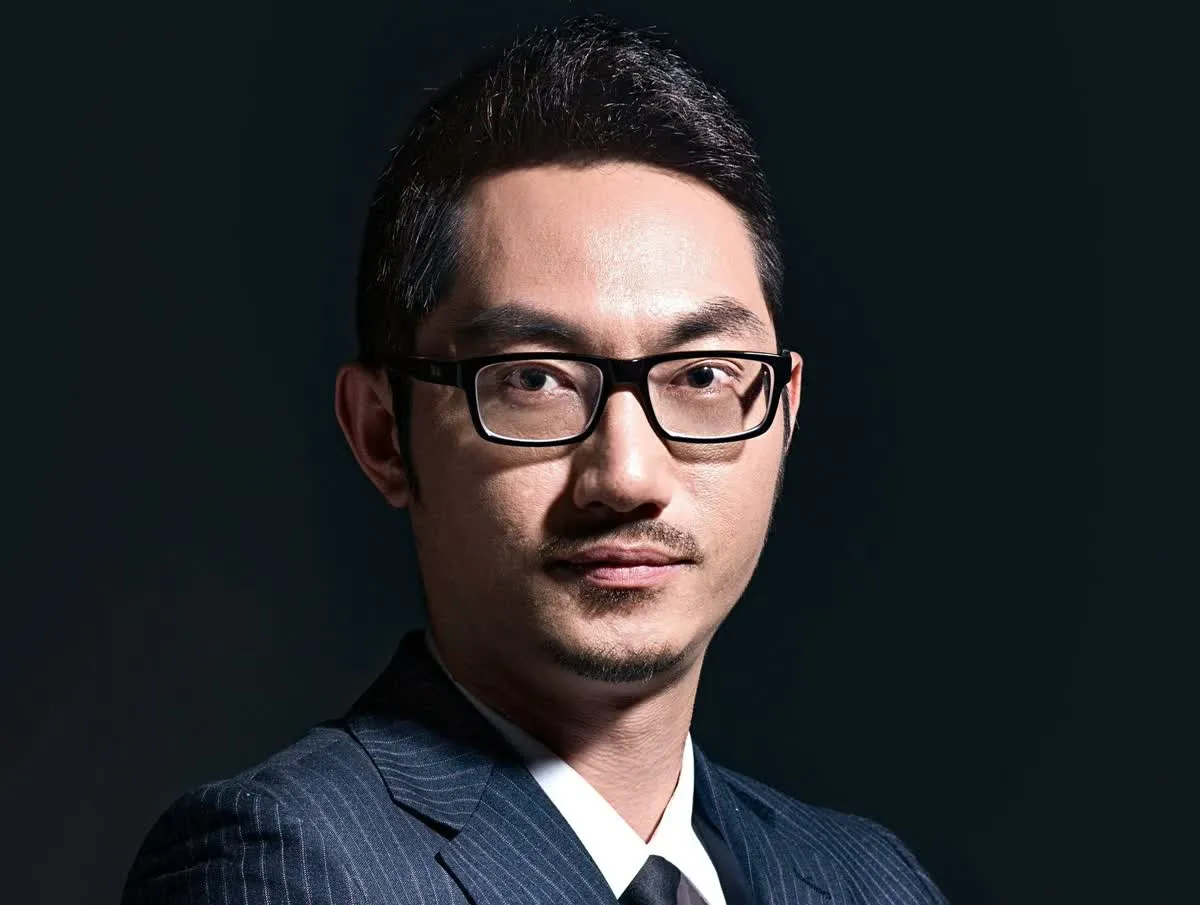
Liang Wenfeng was never supposed to become the face of China’s artificial intelligence boom. For much of his career, the Zhejiang University-trained engineer was known mainly inside quantitative finance circles, where he helped build High-Flyer, a hedge fund that used algorithms, mathematics and computing power to trade China’s markets. Now, after the explosive rise of DeepSeek, Liang has become something rarer: a low-profile technologist whose paper wealth has made him one of the defining business figures of the global AI race.
Bloomberg’s Billionaires Index has estimated Liang’s net worth at about $36 billion after DeepSeek’s latest fundraising, more than double a prior estimate of roughly $16.7 billion. The figure, reported by Bloomberg and carried by The Straits Times, would make him the richest founder of an AI model company, ahead of better-known Silicon Valley names associated with OpenAI and Anthropic. Forbes lists Liang among the world’s billionaires, reflecting how quickly DeepSeek has moved from a specialist Chinese startup to a company watched closely by investors, policymakers and rival labs.
From Quant Trader to AI Power Broker
Liang’s ascent is rooted less in personal branding than in infrastructure. Born in Guangdong province and educated at Zhejiang University, he came out of an engineering culture that prizes systems, optimization and mathematical elegance. In 2016, he co-founded High-Flyer, a quantitative investment firm that used machine learning and statistical models to make trading decisions. By 2019, High-Flyer had created an AI-focused research arm, and Liang was already thinking beyond finance.
That background matters because DeepSeek did not emerge like a conventional venture-backed AI startup. It grew from a pool of capital, engineers and computing infrastructure assembled for quantitative finance. Before U.S. restrictions tightened access to advanced AI chips, High-Flyer had reportedly acquired thousands of Nvidia A100 graphics processors, giving Liang a foundation for large-scale model training at a moment when compute became the world’s most prized AI resource.
In 2023, Liang launched DeepSeek with a stated ambition to pursue artificial general intelligence. At the time, many venture investors were skeptical of frontier-model companies in China, partly because of uncertainty over chip access, regulation and commercialization. Liang’s advantage was that he did not need to behave like a founder chasing the next funding round. High-Flyer’s backing allowed DeepSeek to hire researchers, train models and release technology with fewer immediate commercial constraints than many rivals.
That unusual structure helped shape DeepSeek’s reputation. The company became known for technically ambitious, relatively efficient models and for releasing open-weight systems that developers could inspect, adapt and deploy. In a sector where U.S. companies often emphasize closed platforms and subscription revenue, DeepSeek’s approach gave it a distinct identity: part research lab, part infrastructure company, part symbol of China’s determination to compete at the foundation-model layer.
The $36 Billion Signal
Liang’s estimated fortune is more than a rich-list milestone. It is a signal about how investors are valuing scarce AI assets: talent, chips, proprietary training methods, inference efficiency and distribution. Reports this week said DeepSeek had raised $7.4 billion in its first external funding round, valuing the company above $50 billion, with backers said to include major Chinese strategic and state-linked investors. The Wall Street Journal has reported that DeepSeek is also preparing for a possible Shanghai listing as early as 2027, though such plans remain subject to regulatory and market conditions.
The wealth estimate also reflects Liang’s unusually large economic exposure to DeepSeek. Unlike many U.S. AI founders, whose stakes are diluted across multiple funding rounds and broad co-founder groups, Liang is closely tied to DeepSeek through High-Flyer and its ownership structure. That concentration magnifies the effect of every valuation jump. It also explains why his fortune can move so dramatically when investor appetite for Chinese AI changes.
DeepSeek’s technology has given that appetite a narrative. Its DeepSeek-R1 paper described reasoning models trained with reinforcement learning and said the system achieved performance comparable to OpenAI’s o1-1217 on reasoning tasks, while also releasing open models and distilled versions for the research community. Earlier DeepSeek work emphasized long-term scaling of open-source language models and efficient architectures. These claims made the company especially important to developers and policymakers looking for alternatives to U.S.-controlled AI platforms.
For investors, the appeal is straightforward. If DeepSeek can keep narrowing the performance gap with American frontier labs while operating at lower cost, it could become one of China’s essential AI infrastructure providers. That would place it at the center of enterprise software, cloud services, robotics, manufacturing automation, education technology and state-backed digital transformation. Liang’s fortune is therefore a market bet on both DeepSeek’s models and China’s ability to build an AI stack less dependent on Western suppliers.
China’s AI Moment Meets Its Hardest Test
The Forbes-style version of Liang’s story is tempting: the quiet engineer who bought chips early, ignored conventional investors, built a breakthrough lab and became a billionaire many times over. But the next phase will be harder than the first. Training a celebrated model is not the same as building a durable business. DeepSeek must convert technical credibility into revenue, win enterprise customers, manage enormous compute costs and keep recruiting elite researchers in a market where talent is globally mobile.
It must also navigate geopolitics. AI chips, model safety, open-weight releases, data governance and national security are now inseparable from commercial strategy. DeepSeek’s rise has made Liang a business figure and a geopolitical symbol: proof, for supporters, that China can innovate under pressure; a warning, for critics, that frontier AI capabilities are diffusing faster than regulators expected.
Liang’s understated public profile may be part of his strength. He does not fit the archetype of the celebrity founder. His power comes from patient capital, technical taste and the ability to align researchers around difficult problems. In that sense, his story looks less like a social-media-era startup drama and more like a return to an older industrial logic: accumulate infrastructure, hire obsessively, reduce costs, then scale.
The $36 billion estimate may rise or fall with DeepSeek’s next funding round, market sentiment or an eventual IPO. Paper fortunes in frontier technology can be volatile, especially when valuation rests on expectations rather than mature profits. Yet Liang Wenfeng has already achieved something consequential. He has turned a hedge fund’s computing obsession into one of the world’s most closely watched AI companies—and made himself the clearest financial symbol of China’s bid to challenge Silicon Valley at its own game.