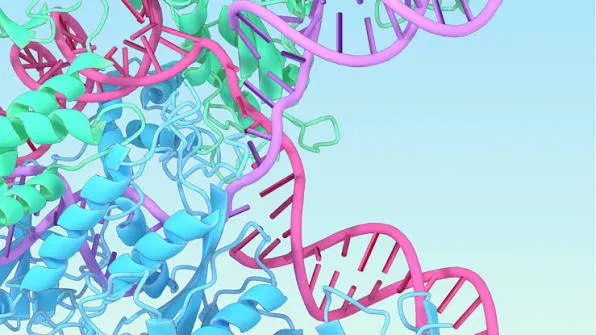
Chinese scientists have unveiled ContactSeek, a novel AI framework leveraging AlphaFold3 contact probability to revolutionize the design of gene editing tools with unprecedented precision.
The research, published in Nature, establishes a new standard for predicting molecular interactions crucial for engineering highly specific and functional biological instruments. This advancement directly addresses long-standing challenges in optimizing CRISPR systems and related nucleases by providing a quantitative measure of structural affinity before laboratory synthesis.
Precision Engineering Through Predictive Modeling
ContactSeek operates by integrating the sophisticated contact probability predictions generated by AlphaFold3, a landmark protein structure prediction system. Instead of relying solely on sequence homology or generalized binding affinities, the framework models the physical likelihood of specific residues interacting within the target complex. This level of atomic detail allows researchers to design gene editing components that interact with their intended genomic sites with minimal off-target effects.
The strategic significance lies in moving gene editing tool development from an empirical, trial-and-error process toward a highly predictive, rational design methodology. By quantifying the probability of key molecular contacts—the 'contact probability'—scientists can fine-tune guide RNA sequences and associated protein domains to achieve superior on-target activity while drastically reducing unintended edits elsewhere in the genome.
The framework specifically addresses the limitations inherent in previous computational approaches, which often treated binding interactions too broadly. ContactSeek provides a granular map of potential molecular partnerships, enabling engineers to select components that are thermodynamically and structurally predisposed to function optimally within the complex biological milieu.
Researchers demonstrated the efficacy of this approach across several challenging gene editing applications, showing significant improvements in both specificity scores and functional yield compared to conventionally designed counterparts. This capability accelerates the preclinical pipeline for developing next-generation therapeutic agents targeting single nucleotide polymorphisms or larger genomic loci.
Implications for Biotechnological Deployment
The development of ContactSeek signals a major inflection point in synthetic biology, providing a powerful computational tool that bridges structure prediction with functional design. The ability to predict interaction probabilities at this level drastically reduces the time and cost associated with high-throughput screening in biological laboratories.
For the biotechnology sector, particularly those focused on gene therapy and agricultural modification, ContactSeek offers a pathway to scalable, reliable engineering. Companies can now iterate through thousands of potential molecular designs computationally, validating their structural viability before committing resources to wet-lab validation.
The underlying methodology relies on extracting meaningful physical constraints from the high-dimensional output of AlphaFold3. This transition represents a mature application of deep learning in molecular biology—moving beyond mere prediction of fold to precise prediction of functional interface geometry. The framework itself is designed for computational efficiency, making it viable for integration into industrial design pipelines.