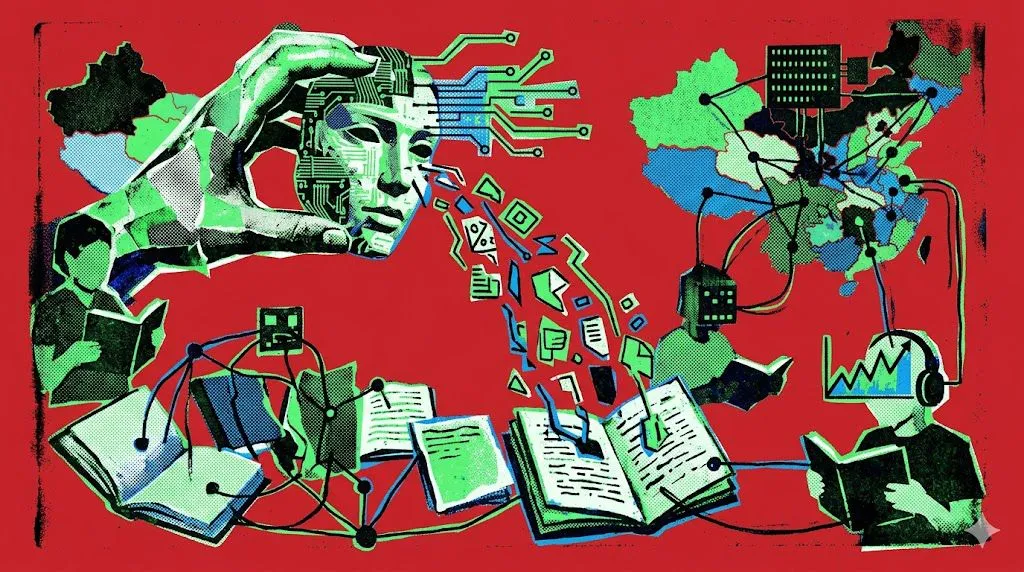
BEIJING: China has launched a large-scale initiative to integrate artificial intelligence into its national literacy and reading programs, aiming to leverage machine learning to standardize and enhance educational outcomes across the country. The move represents a significant step in the government's broader strategy to digitize public services and strengthen foundational education through advanced technology.
According to a report from People's Daily, the implementation involves deploying AI-driven platforms designed to monitor reading progress, provide personalized feedback to students, and assist educators in identifying literacy gaps in real time. The systems utilize natural language processing to analyze comprehension levels and pronunciation, allowing for a more tailored pedagogical approach that can be scaled across diverse provinces and varying socioeconomic environments.
The technological framework focuses on creating an intelligent ecosystem where data collected from digital reading tools informs national educational policy. By analyzing massive datasets of student interactions, policymakers aim to refine curriculum standards and allocate educational resources more efficiently to regions struggling with literacy rates. The integration is expected to provide a standardized benchmark for reading proficiency, reducing the discrepancies between urban and rural learning environments.
Industry analysts suggest that this nationwide rollout serves dual purposes: improving human capital through enhanced literacy and establishing domestic dominance in educational technology. As the government continues to push for "smart education," the success of this AI initiative will likely serve as a blueprint for other sectors of public administration. While the scale of data collection has raised questions regarding digital privacy, official statements emphasize that the primary objective remains the modernization of the national learning infrastructure and the cultivation of a highly skilled workforce ready for a digital economy.