China’s EV market keeps outpacing gasoline cars
SHANGHAI — China’s electric vehicle market is heading for another strong monthly showing, underscoring how quickly battery-powered and plug-in hybrid models are becoming the country’s mainstream passenger cars even as the broader auto market remains uneven.
Retail sales of passenger new energy vehicles are expected to reach about 1.05 million units in June, up 10.5% from May, according to a China Passenger Car Association estimate reported by CnEVPost. The group projected total passenger vehicle retail sales of about 1.65 million units, implying that new energy vehicles would account for about 63.6% of the market, a record share.
The performance is notable because the first half of June showed weakness compared with last year. Retail sales of passenger new energy vehicles totaled 341,000 units from June 1-14, down 8% year over year but up 5% from the same period in May, while overall passenger vehicle retail sales fell 18% from a year earlier.
The result points to a split market: gasoline cars are losing ground faster than electric models, while subsidies, trade-ins and a steady stream of new launches continue to pull buyers into showrooms. China’s 2026 trade-in program kept subsidy caps of up to 20,000 yuan for scrapping older vehicles and 15,000 yuan for trade-ins, support that has helped sustain demand even as competition squeezes automaker margins.
Global growth, tougher competition
China’s momentum comes as electric vehicles continue to reshape the global auto industry. The International Energy Agency said electric car sales exceeded 20 million worldwide in 2025, rising 20% from 2024 and accounting for one in four new cars sold. China remained the largest market, with more than 13 million electric cars sold and close to 55% of new-car sales electric last year.
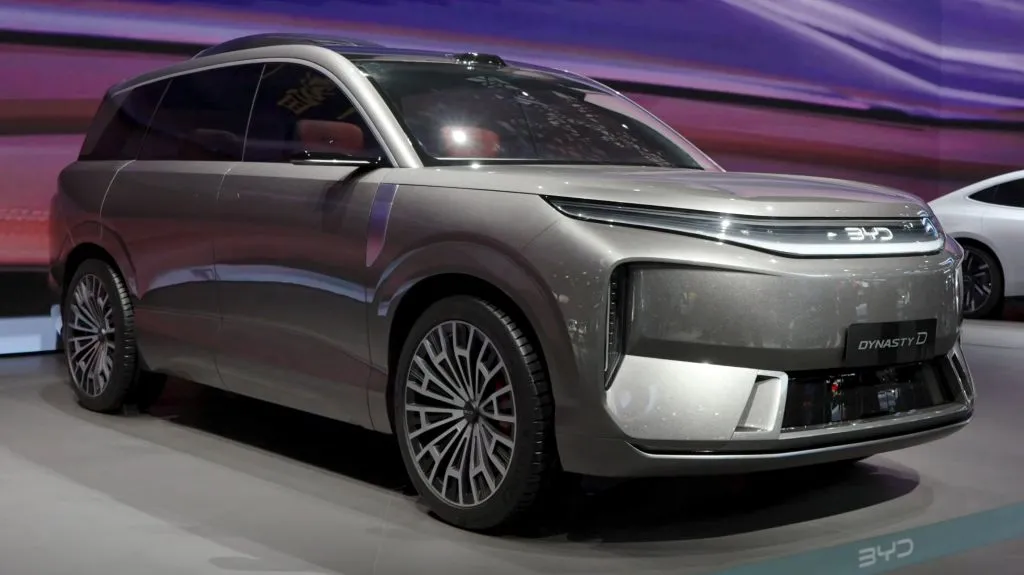
That scale gives Chinese manufacturers advantages in batteries, supply chains and pricing, but it also fuels a punishing domestic contest. BYD remains the dominant mass-market player, while Tesla, Li Auto, Nio, Xpeng, Leapmotor and others are fighting for share across price bands and powertrain types. Range-extended electric vehicles, which use a gasoline engine as a generator, have become especially important for families worried about long-distance driving and charging access.
The next phase of performance will be measured less by headline sales than by profitability, export strength and technology. Chinese brands are expanding in Europe and other markets, but executives have signaled that they expect to compete abroad on quality, software and advanced driver-assistance features rather than simply exporting China’s price war.
For now, the June forecast shows that China’s electric vehicle transition has moved beyond early adoption. Even with slower year-over-year growth and intense discounting, the market is large enough that monthly sales above 1 million units are becoming routine. The challenge for automakers is no longer whether Chinese consumers will buy electric vehicles. It is whether manufacturers can make enough money selling them.