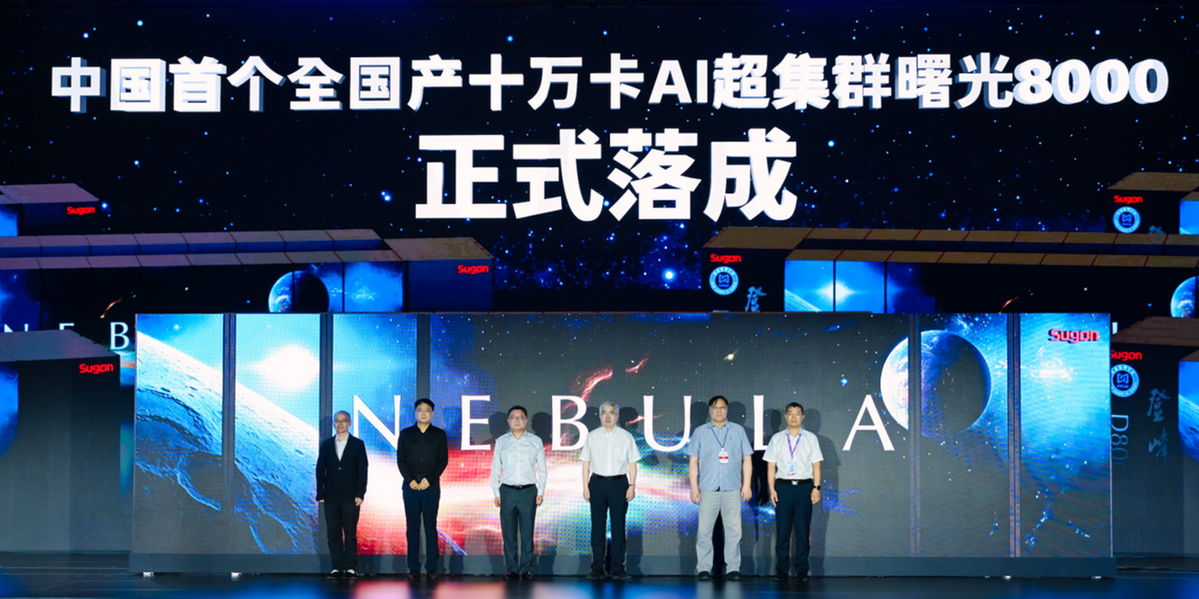
China has launched its first homegrown 100,000-card AI supercluster in Zhengzhou, marking a significant domestic milestone in advanced artificial intelligence computation.
This cutting-edge facility represents a major advancement in China's strategic drive toward self-sufficiency in high-performance computing infrastructure, reducing reliance on foreign technology suppliers for critical AI development.
Domestic AI Compute Power Reaches New Heights
The supercluster deployment integrates a substantial computational capacity designed to power next-generation large language models and complex machine learning applications domestically. The facility is situated in Zhengzhou, a key technological hub within China’s expanding digital infrastructure landscape.
Sources confirm the cluster utilizes domestic hardware components, emphasizing the success of local semiconductor and system integration efforts. This indigenous development addresses geopolitical sensitivities surrounding advanced computing resources, which have become increasingly vital to national technological competitiveness.
The scale of the 100,000-card deployment places it among the most powerful domestically built AI systems currently operational in the country. Such massive computational power is essential for training foundation models that require petabytes of data processing and immense parallelization capabilities.
Industry analysts view this launch not merely as an infrastructural upgrade but as a strategic pivot point. The ability to train proprietary, large-scale models without external dependency accelerates the pace of domestic AI innovation across sectors ranging from finance to manufacturing.
Strategic Implications for China's Digital Sovereignty
The establishment of this supercluster directly supports China’s broader "Made in China 2025" objectives, particularly concerning digital sovereignty. By mastering the deployment and operation of such a large-scale AI engine internally, Chinese researchers can conduct deep-dive research into foundational algorithms while controlling the entire hardware stack.
The technical specifications point toward advanced interconnectivity protocols necessary to manage data flow across tens of thousands of accelerators simultaneously. This level of integration requires sophisticated system architecture design, which the local engineering teams have successfully executed.
This domestic capability mitigates risks associated with international supply chain disruptions or export controls placed on high-end AI chips by other global powers. For China's government and major tech enterprises, this resilience is a paramount strategic asset.
Furthermore, the supercluster serves as a crucial platform for talent cultivation. It provides researchers with access to world-class computational resources needed to mentor the next generation of AI scientists capable of pushing the frontiers of artificial intelligence theory and application within China.
The operational launch signals a maturation in China's domestic technology ecosystem, moving beyond merely assembling imported components toward creating fully integrated, high-performance computing platforms.