China’s payment giants turn to AI
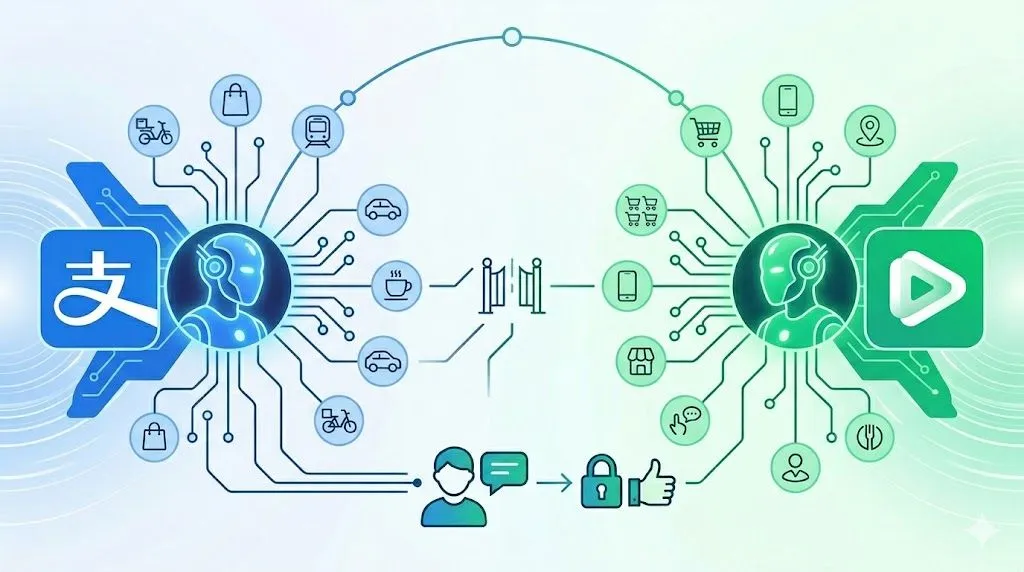
China’s two dominant digital payment platforms are moving beyond the wallet, racing to turn artificial intelligence agents into the next gateway for shopping, transport, food delivery and other everyday services.
Ant Group has begun the biggest redesign of Alipay in two decades, adding a conversational assistant called Ah Bao that can help users navigate more than 10,000 services inside the app. The trial version is available by invitation and can be reached by swiping right from the Alipay home screen.
The overhaul marks a shift for Alipay from a payment app into what Ant hopes will become a broader AI-powered consumer platform. Instead of tapping through menus to hail rides, order meals or find local services, users can ask Ah Bao to handle parts of the process through conversation.
Ant says the assistant will not have authority to make final financial decisions on its own. Payments and other money-related actions still require explicit user confirmation, a safeguard aimed at addressing concerns about autonomous AI tools operating inside financial apps.
Tencent Holdings is making a similar push through WeChat Pay. The company has integrated its AI agent, WorkBuddy, with WeChat Pay, allowing the agent to search for deals, start purchases and complete transactions within Tencent’s ecosystem. The feature initially covers local lifestyle services, including group-buying offers on Meituan.
A battle for the next internet gateway
The moves show how China’s biggest technology companies are trying to defend their platforms as AI agents threaten to change how people use the internet. Rather than opening separate apps or scrolling through mini-programs, consumers may increasingly expect AI assistants to find, compare and execute services on their behalf.
For Alipay, the bet rests on scale. The app has about 1 billion users and is already deeply embedded in Chinese daily life, spanning payments, transport, public services, travel, food delivery and wealth management. By placing an assistant over that ecosystem, Ant is trying to make Alipay less like a wallet and more like an operating system for daily tasks.
For Tencent, the opportunity is tied to WeChat’s role as China’s all-purpose super app. WeChat already combines messaging, payments, shopping, games, official accounts and millions of mini-programs. Tencent President Martin Lau has said AI agents that operate WeChat mini-programs could drive traffic to businesses, suggesting the company sees agents not just as convenience tools but as a new distribution channel.
The contest is also widening. ByteDance, Huawei, Xiaomi, Oppo and Vivo are all seeking roles in the AI-agent economy, whether through large language models, phones, app ecosystems or payment systems. That has raised questions over platform access, security and how much control any one company should have when an AI assistant can move across apps and initiate transactions.
The near-term challenge is trust. Consumers may welcome an assistant that can book a ride, find a discount or reorder groceries, but payments are sensitive. Ant’s insistence on user confirmation and Tencent’s closed-loop approach inside WeChat point to the same conclusion: In China’s next phase of digital commerce, AI agents may do more of the work, but companies still need users to believe they remain in control.