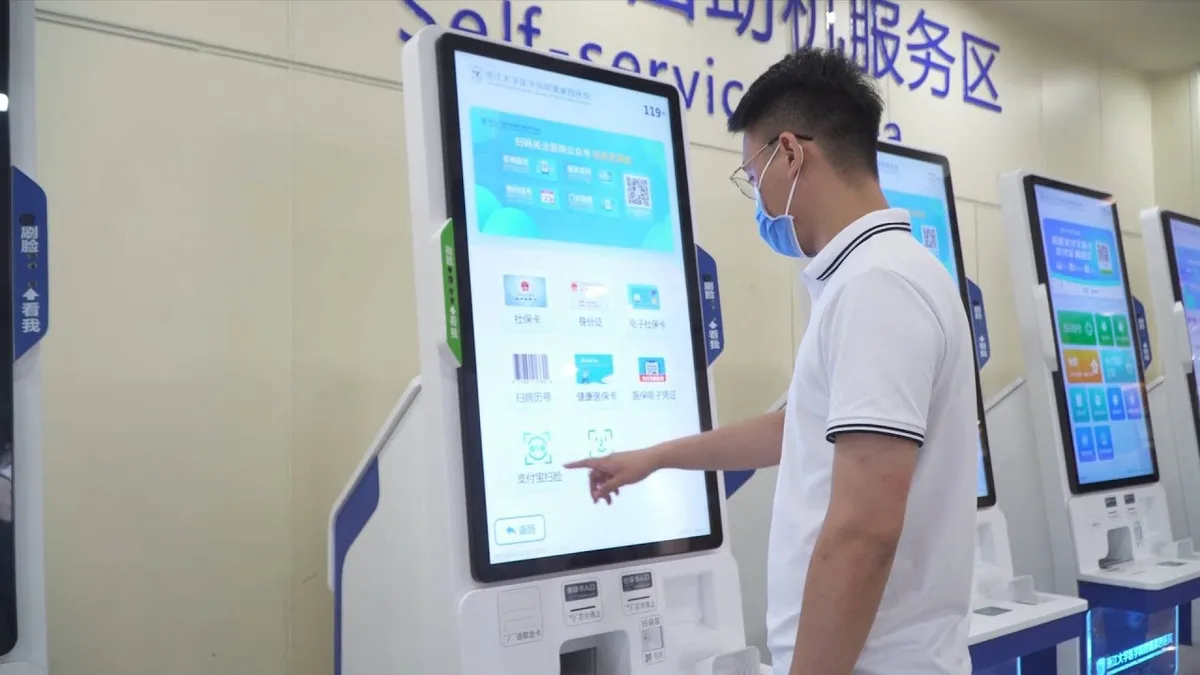
Large specialized AI models are fundamentally reshaping healthcare services across China, promising enhanced diagnostic accuracy and personalized patient care.
AI Transformation in Medical Practice
Jiang Xue, deputy secretary of the CPC committee of Peking University Third Hospital and a key figure observing this technological shift, told the China Daily that these sophisticated artificial intelligence systems are moving beyond mere data processing to actively participate in clinical decision-making. The integration of specialized models allows healthcare providers to analyze complex medical datasets—ranging from genomic sequences to high-resolution imaging—with unprecedented speed and depth.
These applications are demonstrating significant potential in early disease detection, particularly for conditions where subtle patterns might escape human observation during initial screenings. For instance, AI deployed in radiology is reportedly achieving diagnostic consistency rates that rival or exceed experienced specialists in certain fields of medical imaging analysis.
The specialization of these models represents a critical evolutionary step from general-purpose AI tools. Instead of broad applications, modern systems are being fine-tuned on massive, domain-specific datasets—such as oncology records or cardiovascular patient histories. This deep focus enables the algorithms to develop nuanced understandings pertinent solely to specific medical disciplines.
Furthermore, the deployment of these specialized large models is streamlining administrative and operational aspects of healthcare delivery. From optimizing hospital resource allocation to automating the initial triage of non-urgent cases, AI is contributing to a more efficient utilization of scarce medical personnel time.
Implications for Future Healthcare Delivery
The strategic significance of this AI adoption lies in its capacity to address systemic pressures within China’s healthcare infrastructure. As populations age and chronic disease prevalence rises, the demand on traditional medical resources escalates; specialized AI offers a scalable solution to augment, rather than replace, human expertise.
Personalized medicine stands as a primary beneficiary of this technological leap. By processing individual patient profiles against vast repositories of global and local clinical trial data, these models can suggest highly tailored treatment pathways. This moves the paradigm from generalized protocols to interventions precisely calibrated for an individual's biological makeup and disease presentation.
Jiang Xue points to regulatory frameworks as a necessary parallel development to ensure safe and ethical deployment. The industry is navigating complex issues surrounding data privacy, algorithmic bias—ensuring the models perform equitably across diverse demographic groups—and clinical validation standards. Robust governance structures are becoming prerequisites for widespread adoption in critical care settings.
The trajectory indicates a future where human clinicians function as expert supervisors and integrators of AI-derived insights, rather than solely primary data interpreters. The collaboration between advanced computational power and seasoned medical judgment defines the next generation of high-quality patient care in China.